A good invoice template saves time and helps you avoid leaving out important details. Whether you are a freelancer, consultant or tradie, your invoice should make three things clear: who did the work, what was supplied and how much the customer needs to pay.
This guide includes a simple invoice layout you can adapt for your business, plus a few points to check before you send it.
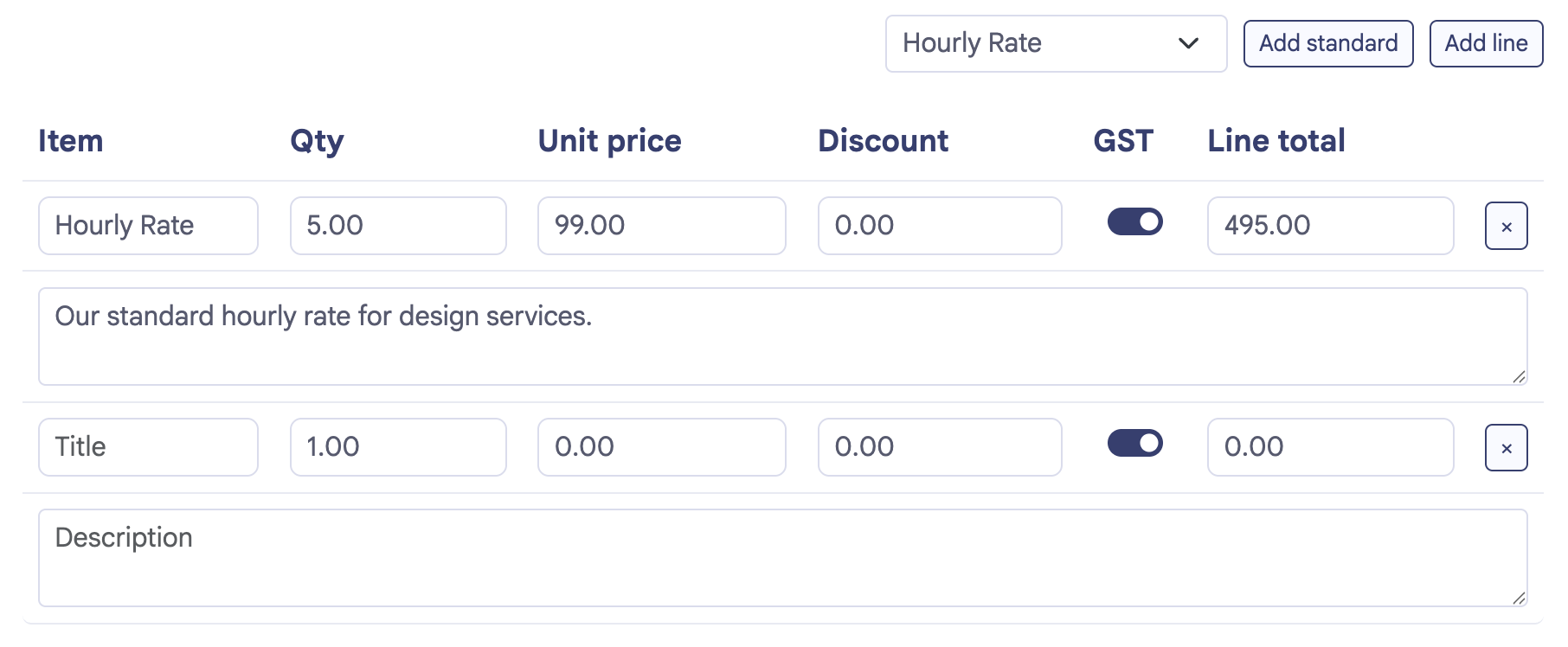
What to include on an Australian invoice
For a standard invoice, it is good practice to include:
- Your business or trading name and ABN.
- Your contact details, such as email and phone.
- A unique invoice number and issue date.
- The customer’s name or business name.
- A clear description of each product or service, with quantities where relevant.
- The amount for each line and the total payable.
- The payment due date and accepted payment methods.
- Any agreed payment terms, purchase order number or job reference.
If you are registered for GST and the sale requires a tax invoice, you need to meet the ATO’s tax invoice requirements as well. If you are not registered for GST, do not call the document a “Tax Invoice” or add GST to your prices. See our guide to sole trader invoice requirements for more detail.
A simple invoice template you can copy
Use the layout below as a starting point. Replace the bracketed text with your own details and adjust it to suit the job.
[YOUR BUSINESS NAME]
[Your ABN]
[Email] | [Phone]
INVOICE
Invoice number: [INV-001]
Issue date: [DD/MM/YYYY]
Due date: [DD/MM/YYYY]
Bill to:
[Customer or business name]
[Customer address or billing details]
| Description | Qty | Rate | Amount |
|---|---|---|---|
| [Work or service supplied] | [1] | [$0.00] | [$0.00] |
Subtotal: [$0.00]
GST, if applicable: [$0.00]
Total due: [$0.00]
Payment details: [Bank transfer or other accepted method]
Payment terms: [For example, payment within 14 days]
Thanks for your business.
This is a general layout, not a substitute for checking the rules that apply to your business. For a tax invoice, make sure the GST details and any other required information are correct. The ATO tax invoice guide explains the requirements, including when the customer’s details need to appear.
Tips for using your template
Give every invoice a unique number
Use a numbering system that makes it easy to identify each invoice. Avoid reusing numbers, and keep the invoice and payment records together.
Make the due date obvious
Write the actual date payment is due as well as any payment terms. If you agree to a deposit or progress payment, show the arrangement clearly.
Describe the job properly
For tradies, include the job address or reference where useful. Freelancers may want to include the project name, service period or agreed milestone. Clear descriptions help the customer approve the invoice without coming back with questions.
Keep a copy
Store a copy of each invoice and track whether it has been paid. Australian businesses generally need to keep most business records for at least five years, so make sure your records are easy to retrieve.
Want to spend less time formatting invoices?
You can also browse our Australian invoice template designs for ideas. If you regularly create quotes and invoices, Simple Invoice helps you create, send and keep track of your invoicing without rebuilding the same document every time.
For more detail, read our guide to invoicing as a sole trader in Australia.
